


Items filtered by date: November 2025
Managing Gout Flares and Protecting Your Foot Health
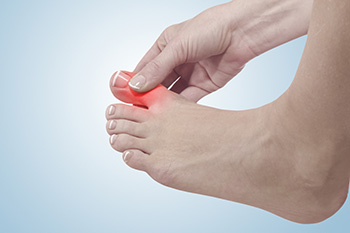
Gout is a painful form of arthritis caused by a buildup of uric acid crystals in the joints, often affecting the big toe. It may develop due to genetics, a diet high in purines, dehydration, or certain medical conditions. A gout flare-up can make the affected joint appear red, swollen, and shiny, and it often feels intensely painful even with the light pressure of a bedsheet. Some individuals describe the sensation as burning or throbbing, and mobility can become difficult during an attack. An interesting fact is that gout has been documented for thousands of years and was once called the disease of kings due to its association with rich foods. A podiatrist can help by identifying the cause of your foot pain, assessing inflammation, and confirming gout through clinical evaluation or imaging. Treatment may include medication, footwear guidance, joint protection strategies, and long-term prevention education. If you experience sudden joint pain or suspect gout, it is suggested that you make an appointment with a podiatrist.
Gout is a painful condition that can be treated. If you are seeking treatment, contact One of our podiatrists from Foot and Ankle Medical Center. Our doctors will treat your foot and ankle needs.
What Is Gout?
Gout is a form of arthritis that is characterized by sudden, severe attacks of pain, redness, and tenderness in the joints. The condition usually affects the joint at the base of the big toe. A gout attack can occur at any random time, such as the middle of the night while you are asleep.
Symptoms
- Intense Joint Pain - Usually around the large joint of your big toe, and it most severe within the first four to twelve hours
- Lingering Discomfort - Joint discomfort may last from a few days to a few weeks
- Inflammation and Redness -Affected joints may become swollen, tender, warm and red
- Limited Range of Motion - May experience a decrease in joint mobility
Risk Factors
- Genetics - If family members have gout, you’re more likely to have it
- Medications - Diuretic medications can raise uric acid levels
- Gender/Age - Gout is more common in men until the age of 60. It is believed that estrogen protects women until that point
- Diet - Eating red meat and shellfish increases your risk
- Alcohol - Having more than two alcoholic drinks per day increases your risk
- Obesity - Obese people are at a higher risk for gout
Prior to visiting your podiatrist to receive treatment for gout, there are a few things you should do beforehand. If you have gout you should write down your symptoms--including when they started and how often you experience them, important medical information you may have, and any questions you may have. Writing down these three things will help your podiatrist in assessing your specific situation so that he or she may provide the best route of treatment for you.
If you have any questions, please feel free to contact our offices located in New Port Richey and Spring Hill, FL . We offer the newest diagnostic and treatment technologies for all your foot care needs.
Keep Your Feet Healthy So You Can Stay Active

Have your feet inspected by a professional before starting a new sport or physical activity. Taking charge of your foot health will keep you in good physical condition and can help you avoid a potential injury, such as a fracture or sprained ankle.
Prevent injuries and see a foot specialist.
Understanding Sever’s Disease in Growing Children
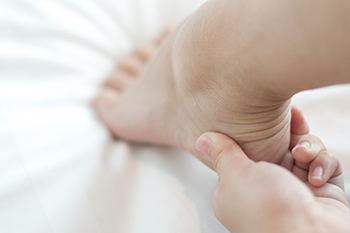
Sever’s disease, also known as calcaneal apophysitis, is a common cause of heel pain in growing children and adolescents, especially those who are active in sports. It occurs when the growth plate in the heel becomes irritated due to repetitive stress or excessive impact. Symptoms often include heel pain during or after activity, tenderness when the heel is squeezed, limping, or difficulty walking barefoot. The affected area may appear slightly swollen or red, and the pain often worsens with running or jumping. Causes include rapid growth spurts, tight calf muscles, improper footwear, or overtraining. A podiatrist can diagnose Sever’s disease through a physical exam, gait analysis, and discussion of activity levels. Treatment focuses on reducing inflammation and relieving pressure through rest, supportive shoes, heel cups, or orthotics. Early management helps prevent recurring pain and allows children to stay active safely. It is suggested that you make an appointment with a podiatrist if your child experiences heel pain.
Sever's disease often occurs in children and teens. If your child is experiencing foot or ankle pain, see One of our podiatrists from Foot and Ankle Medical Center. Our doctors can treat your child’s foot and ankle needs.
Sever’s Disease
Sever’s disease is also known as calcaneal apophysitis, which is a medical condition that causes heel pain I none or both feet. The disease is known to affect children between the ages of 8 and 14.
Sever’s disease occurs when part of the child’s heel known as the growth plate (calcaneal epiphysis) is attached to the Achilles tendon. This area can suffer injury when the muscles and tendons of the growing foot do not keep pace with bone growth. Therefore, the constant pain which one experiences at the back of the heel will make the child unable to put any weight on the heel. The child is then forced to walk on their toes.
Symptoms
Acute pain – Pain associated with Sever’s disease is usually felt in the heel when the child engages in physical activity such as walking, jumping and or running.
Highly active – Children who are very active are among the most susceptible in experiencing Sever’s disease, because of the stress and tension placed on their feet.
If you have any questions, please feel free to contact our offices located in New Port Richey and Spring Hill, FL . We offer the newest diagnostic and treatment technologies for all your foot care needs.
Understanding Bunions
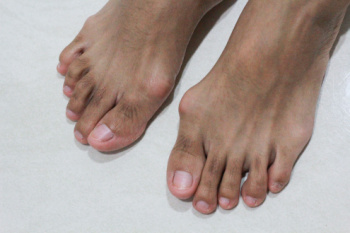
Bunions, also known as hallux valgus, are painful bony bumps that form at the base of the big toe when the top of toe shifts toward the other toes. The condition is often caused by genetic factors, wearing tight or ill-fitting shoes, or prolonged pressure on the foot. Over time, this misalignment can lead to pain, swelling, and redness around the affected area. Symptoms often worsen with walking or standing for long periods, and the big toe may become stiff or difficult to move. Treatment for bunions varies depending on the severity. Non-surgical options include wearing wider shoes, using bunion pads, or taking anti-inflammatory medications for pain relief. In more severe cases, surgery may be required to realign the bones. A podiatrist can assess the condition, recommend appropriate treatment, and provide guidance on footwear or foot exercises. If you are dealing with this condition, it is suggested that you make an appointment with a podiatrist.
If you are suffering from bunion pain, contact One of our podiatrists of Foot and Ankle Medical Center. Our doctors can provide the care you need to keep you pain-free and on your feet.
What Is a Bunion?
Bunions are painful bony bumps that usually develop on the inside of the foot at the joint of the big toe. As the deformity increases over time, it may become painful to walk and wear shoes. Women are more likely to exacerbate existing bunions since they often wear tight, narrow shoes that shift their toes together. Bunion pain can be relieved by wearing wider shoes with enough room for the toes.
Causes
- Genetics – some people inherit feet that are more prone to bunion development
- Inflammatory Conditions - rheumatoid arthritis and polio may cause bunion development
Symptoms
- Redness and inflammation
- Pain and tenderness
- Callus or corns on the bump
- Restricted motion in the big toe
In order to diagnose your bunion, your podiatrist may ask about your medical history, symptoms, and general health. Your doctor might also order an x-ray to take a closer look at your feet. Nonsurgical treatment options include orthotics, padding, icing, changes in footwear, and medication. If nonsurgical treatments don’t alleviate your bunion pain, surgery may be necessary.
If you have any questions, please feel free to contact our offices located in New Port Richey and Spring Hill, FL . We offer the newest diagnostic and treatment technologies for all your foot care needs.
Caring for Growing Feet
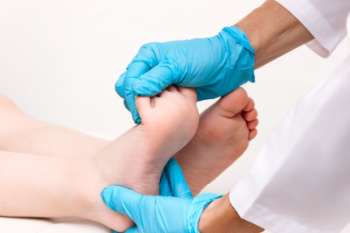
Children’s feet are constantly developing, and issues in the forefoot or midfoot can affect how they walk and play. Common concerns include flat feet, metatarsus adductus, or inward turning of the front of the foot, toe walking, or pain across the ball or arch of the foot. Sometimes these conditions resolve naturally as bones and muscles strengthen, but persistent pain or unusual gait patterns may signal a structural or alignment issue. A podiatrist can evaluate growth, check for joint flexibility, and recommend treatments such as custom orthotics, stretching, or footwear guidance to support healthy development. Early care helps prevent long-term problems and encourages confident, comfortable movement. If your child complains of foot pain, limps, or wears out shoes unevenly, it is suggested that you schedule an appointment with a podiatrist for a professional evaluation and personalized treatment plan.
Making sure that your children maintain good foot health is very important as they grow. If you have any questions, contact One of our podiatrists of Foot and Ankle Medical Center. Our doctors can provide the care you need to keep you pain-free and on your feet.
Keeping Children's Feet Healthy
Having healthy feet during childhood can help prevent medical problems later in life, namely in the back and legs. As children grow, their feet require different types of care. Here are some things to consider...
Although babies do not walk yet, it is still very important to take care of their feet.
Avoid putting tight shoes or socks on his or her feet.
Allow the baby to stretch and kick his or her feet to feel comfortable.
As a toddler, kids are now on the move and begin to develop differently. At this age, toddlers are getting a feel for walking, so don’t be alarmed if your toddler is unsteady or ‘walks funny’.
As your child gets older, it is important to teach them how to take care of their feet.
Show them proper hygiene to prevent infections such as fungus.
Be watchful for any pain or injury.
Have all injuries checked by a doctor as soon as possible.
Comfortable, protective shoes should always be worn, especially at play.
If you have any questions, please feel free to contact our offices located in New Port Richey and Spring Hill, FL . We offer the newest diagnostic and treatment technologies for all your foot care needs.
